Start with what foam rolling actually is
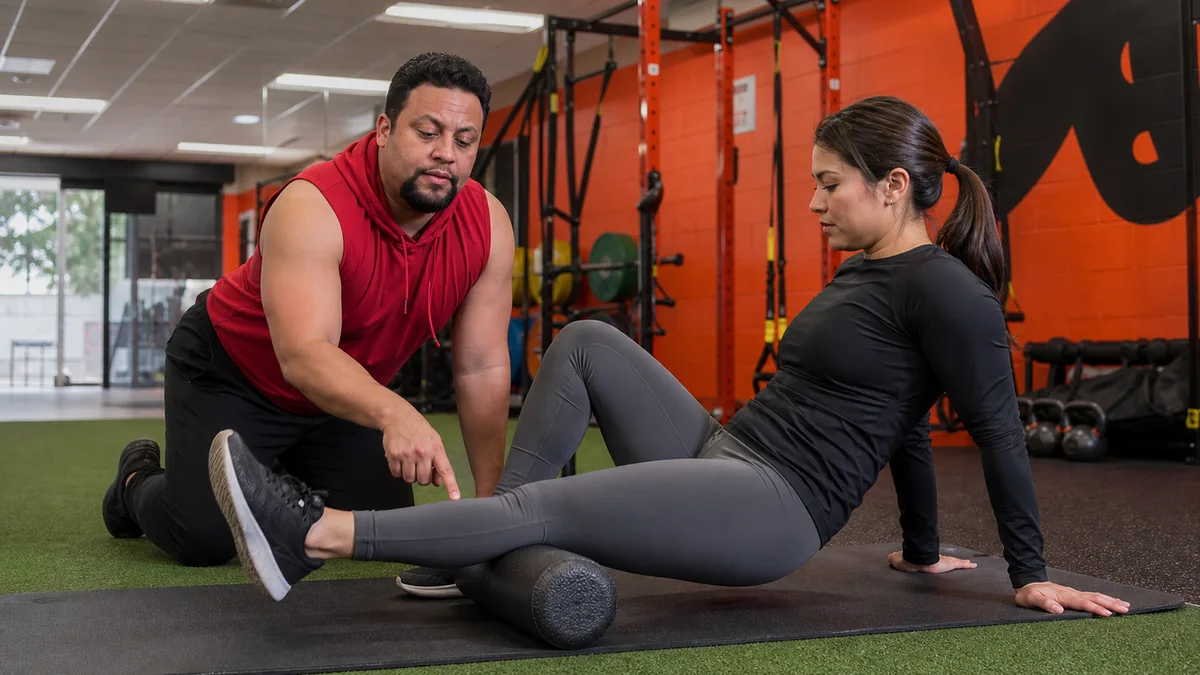
Foam rolling is a form of self-massage that uses your body weight and a cylinder to apply pressure to a muscle. You may also hear it called self-myofascial release. That name is common, but it should not be taken literally: current research does not show that a roller breaks up knots, tears through adhesions, or permanently releases fascia.
A more useful way to think about it is as an optional tool that may temporarily change how a movement or a sore area feels. If it helps you move more comfortably, it can earn a small place in your routine. It is not a required part of a good training plan.
The clearest benefit is short-term mobility
Research suggests that a brief session can increase range of motion compared with doing nothing. The effect is usually immediate and modest, and foam rolling has not consistently outperformed stretching or other useful warm-up activities.
That makes rolling an option—not a shortcut. Before a workout, use it only where you feel restricted, then follow it with dynamic movement and a few practice sets that resemble the training you are about to do.
It may change soreness, not speed tissue repair
A 2024 meta-analysis reported less post-workout soreness after foam rolling, while a 2023 meta-analysis found no significant recovery advantage. The evidence is mixed, and feeling less sore is not the same as proving that muscle tissue healed faster.
Most studies have involved healthy, physically active adults, and the rolling protocols vary considerably. That limits how confidently the findings can be applied to every person or every training situation.
After training, roll if it feels calming or makes the next day easier. Keep the larger recovery priorities in place: appropriate training progression, enough food, hydration, sleep, and professional rehabilitation when an injury requires it.
A simple way to use a foam roller
There is no universally proven perfect dose. Start conservatively and let comfort—not a timer or pain threshold—guide the session.
- Choose a smooth, soft-to-medium roller while you learn how your body responds.
- Place the roller under the muscle, not directly on a bone, joint, or the front or side of your neck.
- Use light-to-moderate pressure, move slowly, and breathe normally.
- Begin with 30–60 seconds per muscle and one or two rounds.
- Before exercise, stand up and practice the movement you want to improve.
- After exercise, stop when the area feels easier; extra pressure is not extra progress.
More pressure is not more progress
Mild tenderness can happen, especially over a muscle you trained recently. Sharp, electric, escalating, or lingering pain is a reason to stop. Numbness, tingling, weakness, sudden swelling, or worsening symptoms deserve appropriate assessment rather than another round on the roller.
Avoid chasing bruises or holding your breath through intense pressure. A recovery tool should leave you feeling more ready to move, not as though you completed another hard workout.
When to skip rolling and get guidance
Do not roll over an open wound or known fracture. If you suspect a blood clot, infection, marked inflammation, or have unexplained swelling, do not self-treat—seek medical evaluation. A suspected blood clot requires urgent medical assessment.
Ask an appropriate healthcare professional before rolling a recent muscle tear or injury, or an area where sensation is reduced or altered.
Foam rolling is not a stand-alone treatment for persistent pain. If pain is changing how you walk, sleep, work, or train, get it evaluated. A Castro Valley personal trainer can help apply movement guidance once it is appropriate, but does not diagnose injuries or replace medical care.
The useful bottom line
Foam rolling may give you a small, temporary mobility boost and may reduce how sore you feel. It does not detox the body, repair damaged tissue on command, or make a thoughtful warm-up and recovery plan unnecessary.
If a brief, comfortable session helps you move or feel better, keep it. If it does nothing for you, you are not missing an essential part of fitness.
Your first seven days, already mapped.
Unlock the free Comeback Starter for a realistic week-one framework and a 10-minute fallback.
Get the free guide