Your first workout is a baseline, not a test
When motivation returns, it is tempting to recreate the pace, volume, or intensity you remember. That approach often answers the wrong question. Your first session back does not need to prove what you used to do; it needs to show what you can comfortably recover from now.
Choose familiar movements, stop with energy in reserve, and notice how you feel later that day and the next morning. That information gives you a useful starting point for the next session.
Build the smallest week that still counts
Start with two protected training windows and one flexible backup. A two-day plan completed for several weeks creates more momentum than an ambitious five-day plan that disappears as soon as work or family gets loud.
Federal guidance encourages inactive adults to begin with small amounts of activity and build toward the broader weekly recommendations over time. You do not need to reach the full target in week one for the week to be worthwhile.
- Two short strength sessions on nonconsecutive days
- Easy walking or another enjoyable aerobic activity on one to three days
- At least one fallback option that takes 10 minutes or less
- A brief end-of-week review before adding anything
Use the talk test and next-day feedback
For aerobic work, a conversational pace is a useful starting cue: you can talk in full sentences, even though your breathing is a little more noticeable. For strength work, choose a variation and resistance you can control without grinding through the final repetitions.
Some muscle awareness can be normal after unfamiliar activity, but sharp pain, chest discomfort, dizziness, faintness, or unusual shortness of breath are not goals to push through. Stop and seek appropriate care when symptoms concern you.
Progress one variable at a time
Once your week feels repeatable, choose one change: add a few minutes, add a small amount of resistance, add one set, or add one training day. Changing everything at once makes it difficult to tell what helped and what exceeded your current recovery capacity.
A comeback is not a race back to old numbers. It is the process of building a current routine that survives ordinary life.
When to get individualized guidance
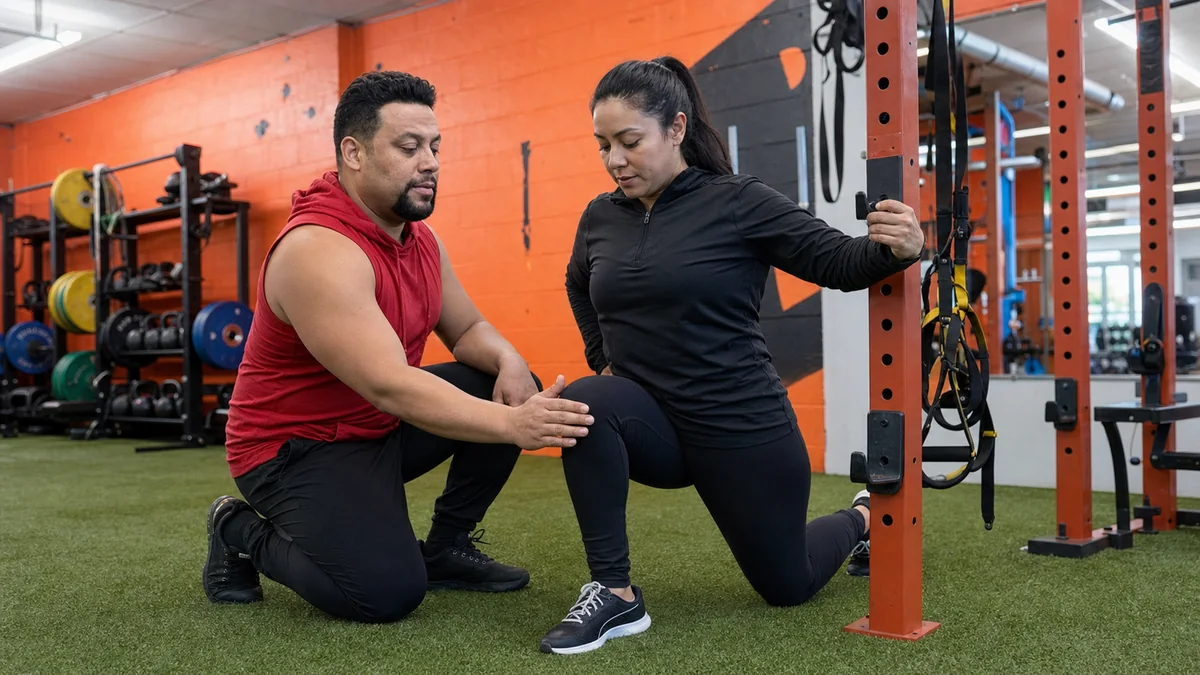
Talk with a qualified healthcare professional before returning to exercise if you have a chronic condition, an injury, symptoms, are pregnant or postpartum, or have been advised to limit activity. A qualified trainer can then help translate appropriate guidance into an exercise plan, but does not diagnose or treat medical conditions.
If your main obstacle is uncertainty, technique, or turning a crowded schedule into a realistic plan, personalized coaching may shorten the trial-and-error period.
Your first seven days, already mapped.
Unlock the free Comeback Starter for a realistic week-one framework and a 10-minute fallback.
Get the free guide